Buy trompeten.eu ?
We are moving the project
trompeten.eu .
Are you interested in purchasing the domain
trompeten.eu ?
domain@kv-gmbh.de · 0541-91531010
Buy trompeten.eu ?
Why do galaxies rotate?
Galaxies rotate due to the conservation of angular momentum. As the gas and dust that make up a galaxy collapse under gravity to form stars and other structures, any initial rotation present in the material is amplified. This rotation causes the galaxy to spin around its center of mass. The rotation of galaxies also helps to maintain their overall shape and stability. **
Are there other galaxies?
Yes, there are other galaxies besides our own Milky Way. Scientists estimate that there are billions of galaxies in the universe, each containing billions of stars. Some of the closest galaxies to us include the Andromeda Galaxy and the Triangulum Galaxy. The study of these other galaxies helps us understand the vastness and diversity of the universe. **


Similar search terms for Galaxies
Top-Angebote
Products related to Galaxies:
-
Dorling Kindersley DK Knowledge Encyclopedia Space The Ultimate Space & Astronomy Reference Guide for Kids and Families - Planets, Stars, Galaxies & the Universe ExplainExplore the wonders of the universe with the DK Knowledge Encyclopedia Space, an inspiring and visually stunning guide to outer space.Packed with high-definition photographs, 3D illustrations, infographics, facts, timelines, and scientific explanations, this encyclopedia takes readers on an unforgettable journey from Earth to the farthest reaches of the cosmos. Perfect for curious readers, young astronomers, and space enthusiasts, this book explains: The solar system, planets, moons, and dwarf planets Stars, nebulas, black holes, galaxies & cosmic phenomena Space exploration, astronauts & spacecraft The Big Bang, universe evolution & future missions The latest science discoveries explained in kid-friendly language A brilliant educational book for STEM learners, classrooms, home libraries, and children aged 8–14 who love space.9,99 £*Shipping: 2,99 £Secure redirect to the provider
-
Usborne Lift-The-Flap Look Inside: Space by Rob Lloyd Jones - An interactive lift-the-flap introduction to galaxies, stars and the moon for young chilWhy do stars shine? And how was the moon made? Children can blast off into space with this fantastic interactive flap book revealing the secrets of the Universe. Vibrant illustrations and simple explanations combined with over 70 flaps to lift. Each double page covers a different topic, including 'Glittering galaxies', 'On the Moon' and 'Space Station'.5,99 £*Shipping: 2,99 £Secure redirect to the provider
-
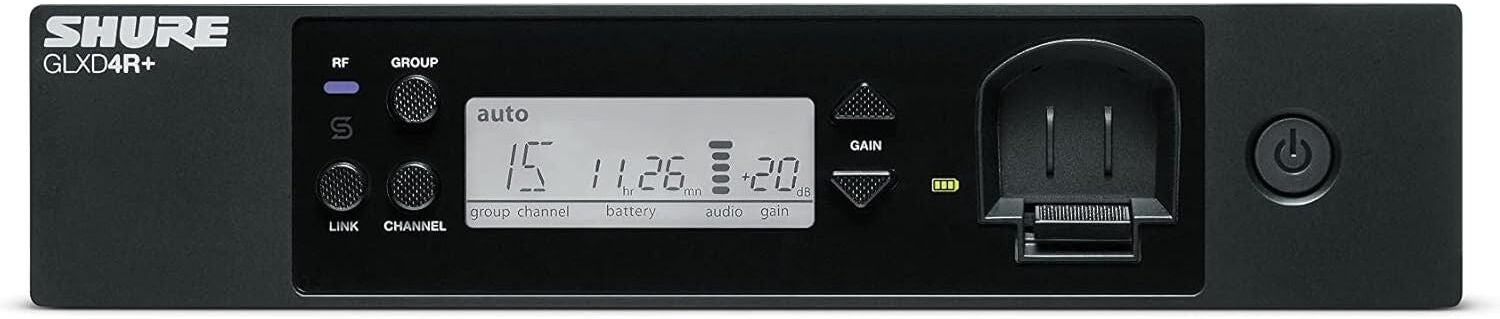
Shure GLXD14R+ Dual Band Digital Wireless Guitar System – Rackmount Receiver, Bodypack Transmitter & WA302 Instrument Cable, NewOverview Go wireless on stage without compromising your tone with the Shure GLXD14R+ Dual Band Pro Digital Wireless System . Designed for guitar, bass and instrument performance , this professional rackmount wireless system includes the GLXD4R+ half-rack receiver , GLXD1+ bodypack transmitter , WA302 TA4F to 1/4" instrument cable , SB904 rechargeable battery , power supply, rackmount hardware and carry bag. Shure lists the GLXD14R+ as a Dual Band Wireless Rack System featuring automatic frequency management, Dual Band Technology and up to 12 hours of rechargeable battery use . Key Features & Benefits Perfect for Guitar and Bass The included WA302 instrument cable connects your guitar or bass to the GLXD1+ bodypack transmitter, giving players freedom to move without being tied to a standard instrument lead. Shure confirms the system includes the WA302 Instrument Cable, TA4F to 1/4". Dual Band Wireless Reliability GLX-D+ Dual Band technology operates across 2.4GHz and 5.8GHz ranges, helping the system maintain reliable wireless performance in more demanding environments. Automatic Frequency Management The system automatically manages frequency selection, helping avoid interference and keeping setup simple for performers, venues, rehearsal rooms and touring musicians. Shure highlights automatic frequency management with Dual Band Technology for reliable and consistent performance. Up to 12 Hours Battery Life The included SB904 lithium-ion rechargeable battery provides up to 12 hours of use, ideal for rehearsals, live shows, church performances, studio sessions and long events. Professional Rackmount Receiver The GLXD4R+ half-rack receiver is built for stage, studio and rack setups, with rackmount hardware included for clean installation in professional rigs. Shure lists the GLXD4R+ as a Dual Band Half-Rack Receiver and confirms rack-mount hardware is included. Recharge Battery from the Receiver The GLXD4R+ receiver includes an integrated battery charging bay, making it easy to charge the SB904 battery between sets or sessions. Strong Stage Range The system is commonly listed with up to 100 ft / 30 m range , giving guitarists and bassists practical movement space on stage and in rehearsal environments. Rugged Bodypack Design The GLXD1+ bodypack transmitter features rugged metal construction with an ergonomic design and reversible belt clip, making it suitable for regular performance use. Clean Digital Audio Performance The GLX-D+ system is designed for clear digital wireless audio, helping preserve guitar and bass tone while removing the restriction of a traditional cable. Shure describes the GLXD4R+ receiver as delivering exceptional digital audio clarity. Why Choose This Product The Shure GLXD14R+ is a premium wireless solution for guitarists and bassists who want reliable stage freedom with professional rackmount convenience. It is ideal for musicians who need a system that is easy to set up, dependable during performance and practical for touring...649,00 £*Shipping: 0,00 £Secure redirect to the provider
-
Uplifted Goods Precision Dial Indicator Gauge Measurement Instrument Precision Dial Indicator Gauge Measurement InstrumentAchieve professional grade accuracy in your workshop with the 2025 Precision Dial Indicator Gauge. This essential measurement instrument is engineered for high sensitivity and stability, featuring a clear 0.01mm resolution for precise mechanical and...49,97 $*Shipping: 0,00 $Secure redirect to the provider



-
What are spiral galaxies?
Spiral galaxies are a type of galaxy characterized by their distinctive spiral arms that extend outwards from a central bulge. These arms are made up of stars, gas, and dust, and they give the galaxy a pinwheel-like appearance. Spiral galaxies are often found to be relatively young and active, with ongoing star formation occurring in their arms. Our own Milky Way galaxy is a spiral galaxy. **
-
Why are galaxies flat?
Galaxies are flat because of the way they form and rotate. When galaxies form, the gas and dust that make them up collapse into a spinning disk shape due to the conservation of angular momentum. This spinning motion causes the material to flatten out into a disk, much like how pizza dough flattens out when spun. The gravitational forces within the galaxy also contribute to this flat shape, as they pull the material towards the center of the galaxy, further flattening it out. **
-
Why are galaxies disk-shaped?
Galaxies are disk-shaped because of the way they form and evolve. When galaxies form, the gas and dust that make them up collapse under gravity, and as they spin, they flatten out into a disk shape. This is due to the conservation of angular momentum, which causes the material to flatten into a spinning disk as it collapses. Over time, the gravitational forces within the galaxy also help to maintain this disk shape. Additionally, the presence of a supermassive black hole at the center of many galaxies can also contribute to the disk shape by influencing the motion of stars and gas within the galaxy. **
-
What do galaxies revolve around?
Galaxies do not revolve around a single point or object. Instead, galaxies are part of galaxy clusters, which are groups of galaxies bound together by gravity. These galaxy clusters can revolve around a common center of mass, which is determined by the combined gravitational forces of all the galaxies within the cluster. Additionally, galaxies themselves can also rotate around their own centers, with stars and other celestial bodies within the galaxies orbiting around the galactic center. **


Which telescope is suitable for galaxies?
A telescope with a large aperture and high magnification is suitable for observing galaxies. The large aperture allows for more light to enter the telescope, making it easier to observe the faint light emitted by distant galaxies. High magnification helps to bring out the details and structure of the galaxies, allowing for a more detailed observation. Telescopes with good image quality and low levels of distortion are also important for observing galaxies, as they can be quite faint and distant. **
Where can one see other galaxies?
Other galaxies can be seen from Earth using telescopes, both ground-based and space-based. Observatories such as the Hubble Space Telescope and the James Webb Space Telescope have provided stunning images of distant galaxies. Amateur astronomers can also observe other galaxies using smaller telescopes and even binoculars, especially in areas with low light pollution. Additionally, some planetariums and science centers offer programs and exhibits that showcase images and information about other galaxies. **
Top-Angebote
Products related to Galaxies:
-
Antonina Vella Galaxies Blue WallpaperSculptural shapes create a universe of textural, raised, freeform silhouettes on modern color in pattern Galaxies. This Galaxies Wallpaper measures approximately 27 inches wide by 27 feet long, covering About 60.8 square feet per roll.187,00 $*Shipping: 0,00 $Secure redirect to the provider
-
Dorling Kindersley DK Knowledge Encyclopedia Space The Ultimate Space & Astronomy Reference Guide for Kids and Families - Planets, Stars, Galaxies & the Universe ExplainExplore the wonders of the universe with the DK Knowledge Encyclopedia Space, an inspiring and visually stunning guide to outer space.Packed with high-definition photographs, 3D illustrations, infographics, facts, timelines, and scientific explanations, this encyclopedia takes readers on an unforgettable journey from Earth to the farthest reaches of the cosmos. Perfect for curious readers, young astronomers, and space enthusiasts, this book explains: The solar system, planets, moons, and dwarf planets Stars, nebulas, black holes, galaxies & cosmic phenomena Space exploration, astronauts & spacecraft The Big Bang, universe evolution & future missions The latest science discoveries explained in kid-friendly language A brilliant educational book for STEM learners, classrooms, home libraries, and children aged 8–14 who love space.9,99 £*Shipping: 2,99 £Secure redirect to the provider
-
Usborne Lift-The-Flap Look Inside: Space by Rob Lloyd Jones - An interactive lift-the-flap introduction to galaxies, stars and the moon for young chilWhy do stars shine? And how was the moon made? Children can blast off into space with this fantastic interactive flap book revealing the secrets of the Universe. Vibrant illustrations and simple explanations combined with over 70 flaps to lift. Each double page covers a different topic, including 'Glittering galaxies', 'On the Moon' and 'Space Station'.5,99 £*Shipping: 2,99 £Secure redirect to the provider
-
Why do galaxies rotate?
Galaxies rotate due to the conservation of angular momentum. As the gas and dust that make up a galaxy collapse under gravity to form stars and other structures, any initial rotation present in the material is amplified. This rotation causes the galaxy to spin around its center of mass. The rotation of galaxies also helps to maintain their overall shape and stability. **
-
Are there other galaxies?
Yes, there are other galaxies besides our own Milky Way. Scientists estimate that there are billions of galaxies in the universe, each containing billions of stars. Some of the closest galaxies to us include the Andromeda Galaxy and the Triangulum Galaxy. The study of these other galaxies helps us understand the vastness and diversity of the universe. **
-
What are spiral galaxies?
Spiral galaxies are a type of galaxy characterized by their distinctive spiral arms that extend outwards from a central bulge. These arms are made up of stars, gas, and dust, and they give the galaxy a pinwheel-like appearance. Spiral galaxies are often found to be relatively young and active, with ongoing star formation occurring in their arms. Our own Milky Way galaxy is a spiral galaxy. **
-
Why are galaxies flat?
Galaxies are flat because of the way they form and rotate. When galaxies form, the gas and dust that make them up collapse into a spinning disk shape due to the conservation of angular momentum. This spinning motion causes the material to flatten out into a disk, much like how pizza dough flattens out when spun. The gravitational forces within the galaxy also contribute to this flat shape, as they pull the material towards the center of the galaxy, further flattening it out. **
Similar search terms for Galaxies
-
Shure GLXD14R+ Dual Band Digital Wireless Guitar System – Rackmount Receiver, Bodypack Transmitter & WA302 Instrument Cable, NewOverview Go wireless on stage without compromising your tone with the Shure GLXD14R+ Dual Band Pro Digital Wireless System . Designed for guitar, bass and instrument performance , this professional rackmount wireless system includes the GLXD4R+ half-rack receiver , GLXD1+ bodypack transmitter , WA302 TA4F to 1/4" instrument cable , SB904 rechargeable battery , power supply, rackmount hardware and carry bag. Shure lists the GLXD14R+ as a Dual Band Wireless Rack System featuring automatic frequency management, Dual Band Technology and up to 12 hours of rechargeable battery use . Key Features & Benefits Perfect for Guitar and Bass The included WA302 instrument cable connects your guitar or bass to the GLXD1+ bodypack transmitter, giving players freedom to move without being tied to a standard instrument lead. Shure confirms the system includes the WA302 Instrument Cable, TA4F to 1/4". Dual Band Wireless Reliability GLX-D+ Dual Band technology operates across 2.4GHz and 5.8GHz ranges, helping the system maintain reliable wireless performance in more demanding environments. Automatic Frequency Management The system automatically manages frequency selection, helping avoid interference and keeping setup simple for performers, venues, rehearsal rooms and touring musicians. Shure highlights automatic frequency management with Dual Band Technology for reliable and consistent performance. Up to 12 Hours Battery Life The included SB904 lithium-ion rechargeable battery provides up to 12 hours of use, ideal for rehearsals, live shows, church performances, studio sessions and long events. Professional Rackmount Receiver The GLXD4R+ half-rack receiver is built for stage, studio and rack setups, with rackmount hardware included for clean installation in professional rigs. Shure lists the GLXD4R+ as a Dual Band Half-Rack Receiver and confirms rack-mount hardware is included. Recharge Battery from the Receiver The GLXD4R+ receiver includes an integrated battery charging bay, making it easy to charge the SB904 battery between sets or sessions. Strong Stage Range The system is commonly listed with up to 100 ft / 30 m range , giving guitarists and bassists practical movement space on stage and in rehearsal environments. Rugged Bodypack Design The GLXD1+ bodypack transmitter features rugged metal construction with an ergonomic design and reversible belt clip, making it suitable for regular performance use. Clean Digital Audio Performance The GLX-D+ system is designed for clear digital wireless audio, helping preserve guitar and bass tone while removing the restriction of a traditional cable. Shure describes the GLXD4R+ receiver as delivering exceptional digital audio clarity. Why Choose This Product The Shure GLXD14R+ is a premium wireless solution for guitarists and bassists who want reliable stage freedom with professional rackmount convenience. It is ideal for musicians who need a system that is easy to set up, dependable during performance and practical for touring...649,00 £*Shipping: 0,00 £Secure redirect to the provider
-
Uplifted Goods Precision Dial Indicator Gauge Measurement Instrument Precision Dial Indicator Gauge Measurement InstrumentAchieve professional grade accuracy in your workshop with the 2025 Precision Dial Indicator Gauge. This essential measurement instrument is engineered for high sensitivity and stability, featuring a clear 0.01mm resolution for precise mechanical and...49,97 $*Shipping: 0,00 $Secure redirect to the provider
-
Mustard Wood Play Music Instrument With Bench For Kids Black 59cm H X 57cm W X 28cm DThe newly designed children's electronic piano is composed of high-quality MDF boards, made of environmentally friendly materials, odorless and easy to clean. It can be used by children with confidence. This children's electronic piano features a 37-key mode, making it suitable for even very young children to use, adding a unique touch of joy to their childhood. This electronic piano was designed with 128 tones, 128 rhythms, and 30 demo songs, which can be switched by pressing the button below the piano. This children's piano is equipped with microphone input and headphone mode, providing children with a unique experience. This kid's electric piano also features Bluetooth functionality, allowing it to be connected to a mobile phone or tablet to select the music that children like to play. To enable children to locate each key more accurately, the piano keys are equipped with note stickers, making it more convenient for children to play. This electric piano is a great choice as a birthday or Christmas gift for children, allowing them to have fun while also learning a skill. To better store the children's electronic piano, we have equipped it with a piano cover to help keep it tidy. DIY stickers can not only add beauty to this electric piano but also exercise children's hands-on ability. The songbook with 30 pieces of music also adds a touch of fun to the children's playing. This electric piano adopts two power supply modes, with a power adapter and battery power. Battery power allows you to use it normally even outdoors, and the battery is not included in the packaging. Electric piano size is 22.44 "* 11.02" * 23.23 ", the size of the stool is 11.02 "* 7.48" * 7.48". Brand Name: Mustard. Colour: Black75,99 £*Shipping: 0,00 £Secure redirect to the provider
-
Antonina Vella Galaxies White WallpaperSculptural shapes create a universe of textural, raised, freeform silhouettes on modern color in pattern Galaxies. This Galaxies Wallpaper measures approximately 27 inches wide by 27 feet long, covering About 60.8 square feet per roll.187,00 $*Shipping: 0,00 $Secure redirect to the provider
-
Why are galaxies disk-shaped?
Galaxies are disk-shaped because of the way they form and evolve. When galaxies form, the gas and dust that make them up collapse under gravity, and as they spin, they flatten out into a disk shape. This is due to the conservation of angular momentum, which causes the material to flatten into a spinning disk as it collapses. Over time, the gravitational forces within the galaxy also help to maintain this disk shape. Additionally, the presence of a supermassive black hole at the center of many galaxies can also contribute to the disk shape by influencing the motion of stars and gas within the galaxy. **
-
What do galaxies revolve around?
Galaxies do not revolve around a single point or object. Instead, galaxies are part of galaxy clusters, which are groups of galaxies bound together by gravity. These galaxy clusters can revolve around a common center of mass, which is determined by the combined gravitational forces of all the galaxies within the cluster. Additionally, galaxies themselves can also rotate around their own centers, with stars and other celestial bodies within the galaxies orbiting around the galactic center. **
-
Which telescope is suitable for galaxies?
A telescope with a large aperture and high magnification is suitable for observing galaxies. The large aperture allows for more light to enter the telescope, making it easier to observe the faint light emitted by distant galaxies. High magnification helps to bring out the details and structure of the galaxies, allowing for a more detailed observation. Telescopes with good image quality and low levels of distortion are also important for observing galaxies, as they can be quite faint and distant. **
-
Where can one see other galaxies?
Other galaxies can be seen from Earth using telescopes, both ground-based and space-based. Observatories such as the Hubble Space Telescope and the James Webb Space Telescope have provided stunning images of distant galaxies. Amateur astronomers can also observe other galaxies using smaller telescopes and even binoculars, especially in areas with low light pollution. Additionally, some planetariums and science centers offer programs and exhibits that showcase images and information about other galaxies. **
* All prices are inclusive of VAT and, if applicable, plus shipping costs. The offer information is based on the details provided by the respective shop and is updated through automated processes. Real-time updates do not occur, so deviations can occur in individual cases. ** Note: Parts of this content were created by AI.